Lycia in history
A road through three thousand years.
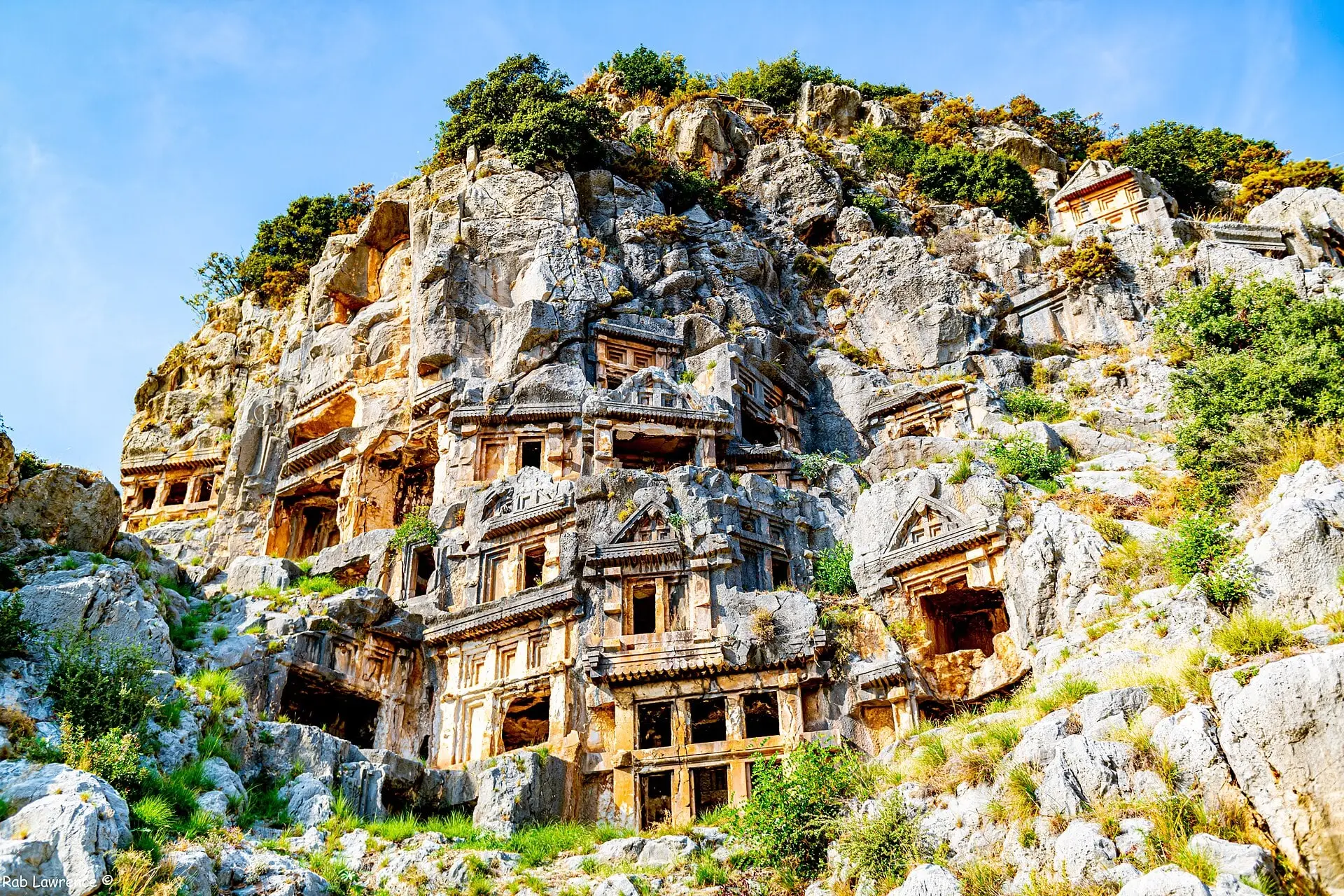
The Lycians built their cities on this coast long before Rome, carved their tombs into the cliffs and governed themselves as a league of free cities. The trail that bears their name still passes their houses for the dead.
01Who were the Lycians?
Lycia was the mountainous peninsula between the bays of Fethiye and Antalya, walled in by the Akdağ and Beydağları ranges. In the Bronze Age, Hittite and Egyptian records speak of the Lukka lands on this coast, and the Lukka fought beside the Hittites at the battle of Kadesh in 1274 BC.
The Greeks had their own stories. Homer brings the Lycians to Troy under Sarpedon and Glaucus, from far-off Lycia by the eddying Xanthos. Herodotus says they came from Crete, called themselves Termilae, and had one custom found nowhere else: they took their names from their mothers, not from their fathers.
They were fiercely independent. When the Persian general Harpagus reached Xanthos around 545 BC, Herodotus writes, its men gathered their wives, children and goods on the acropolis, set it alight and went out to fight until none were left. Lycia then lived under Persia, Alexander and his successors, Rhodes and Rome, yet kept its own character for centuries.
02Language & writing
An alphabet of their own.
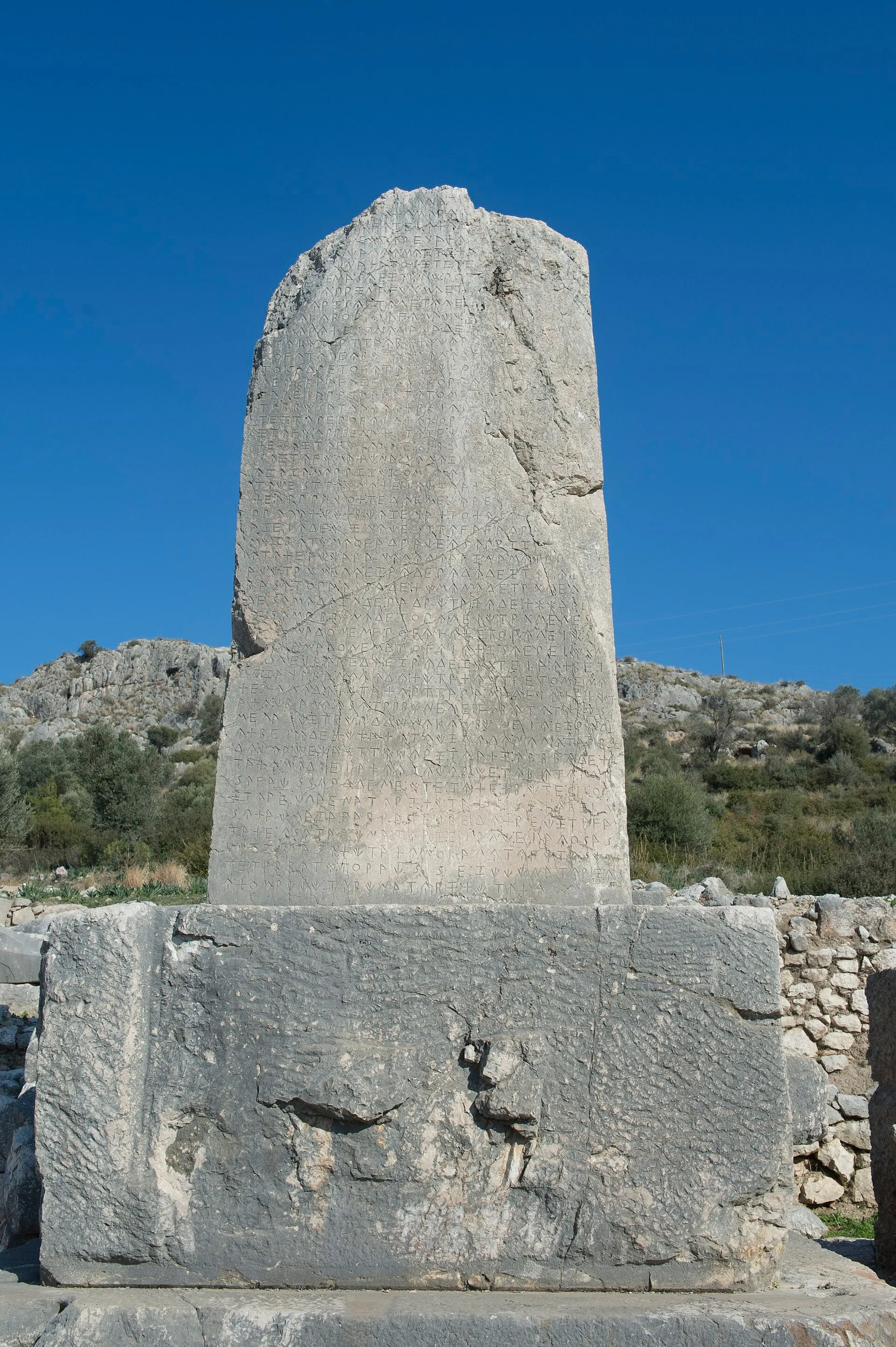
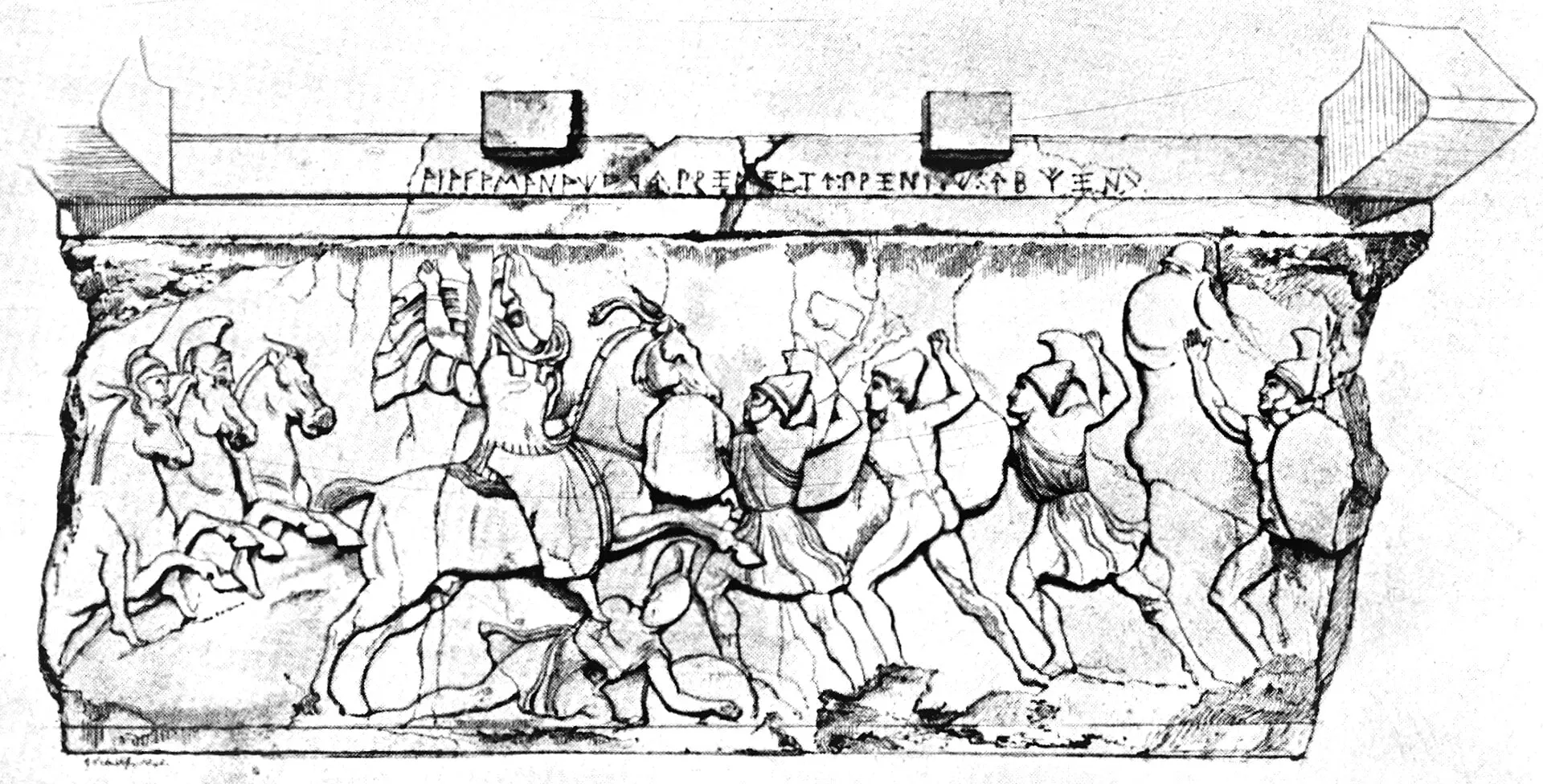
Lycian belongs to the Anatolian branch of the Indo-European languages, the family of Hittite and Luwian; the Danish linguist Holger Pedersen showed the link in 1945. It was written in an alphabet of 29 letters adapted from Greek. About two hundred inscriptions survive, most of them from the 5th and 4th centuries BC, cut on tombs and stelae. After Alexander, Greek slowly took its place.
Two stones did most to unlock it. The Inscribed Pillar at Xanthos carries the longest Lycian text known, with a Greek poem among its lines. The trilingual stele from the Letoon, found in 1973, repeats a decree of 337 BC in Lycian, Greek and Aramaic.
03 Houses for the dead
Four ways to build a tomb.
No other people of the ancient world built for their dead quite like the Lycians. You will walk past their tombs in fields, on headlands and half-sunk in the sea; these are the four kinds to look for.
-
© Dosseman · CC BY-SA 4.0 Pillar tombs
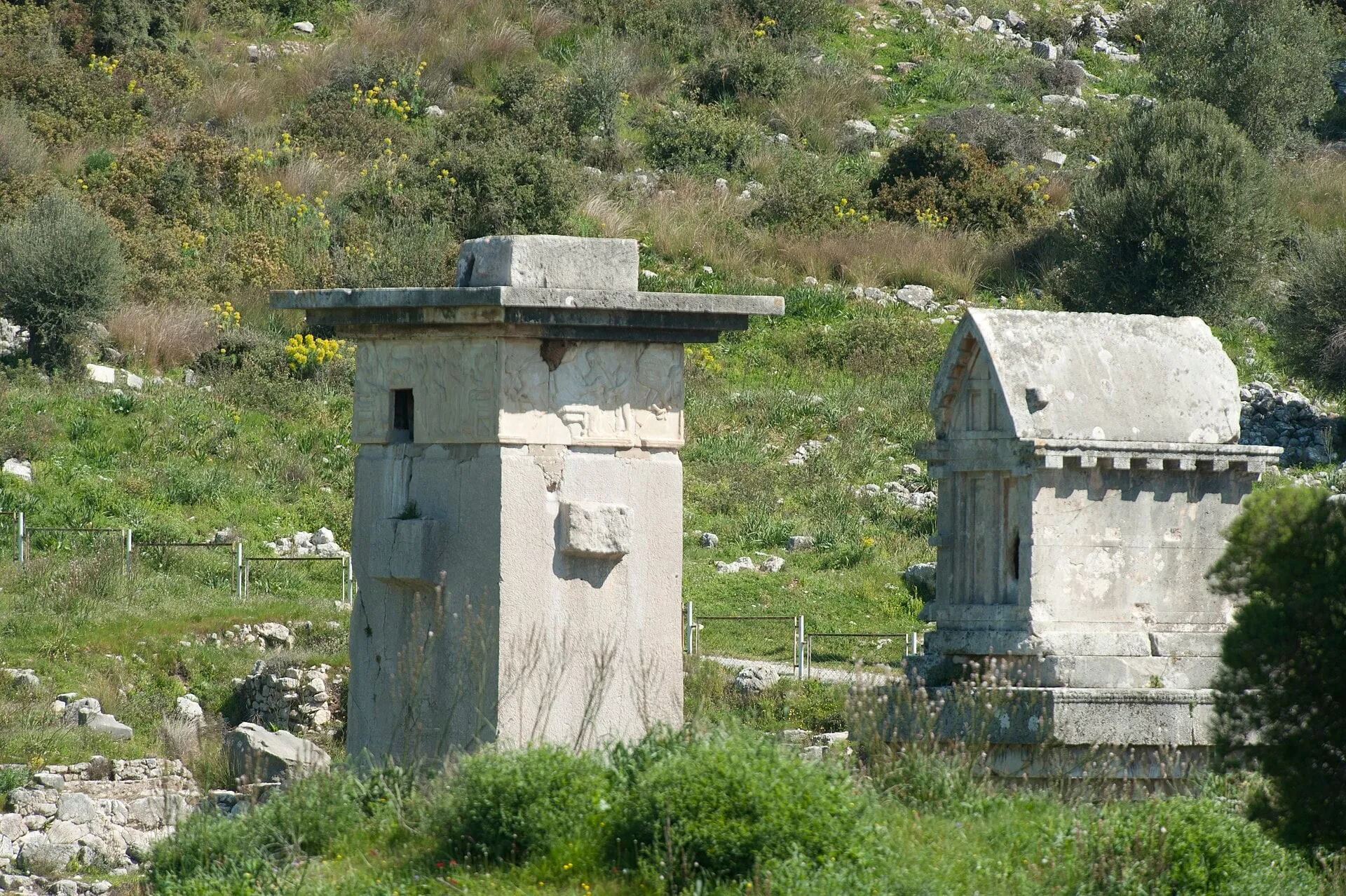
The oldest and most Lycian form: a stone burial chamber raised high on a single pillar. The Harpy Tomb at Xanthos, carved around 480 BC, is named after the winged figures on its reliefs; the originals are now in the British Museum.
-
© Photograph by Mike Peel (www.mikepeel.net). · CC BY-SA 4.0 Temple tombs
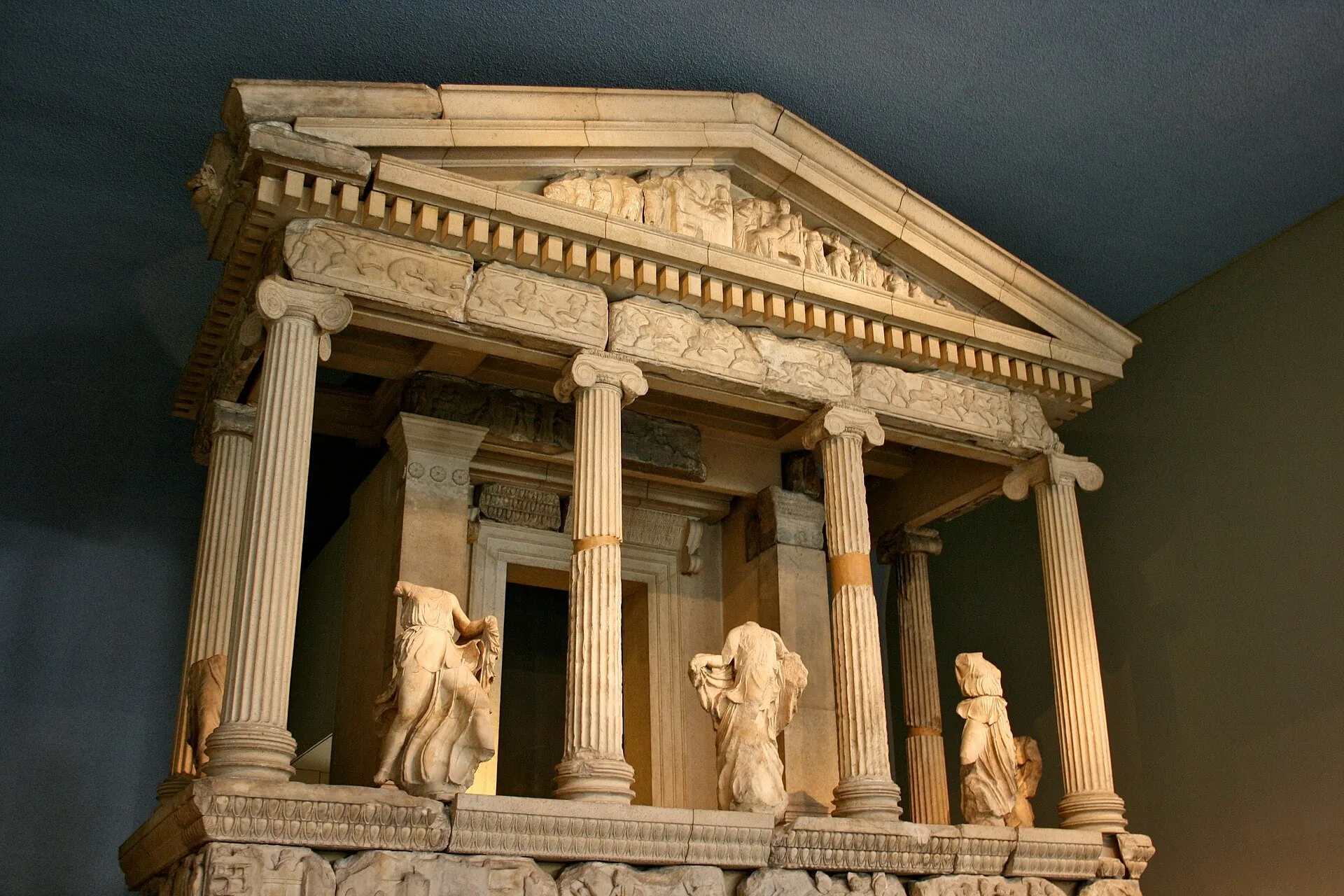
Rulers built tombs like small Greek temples. The Nereid Monument, raised around 390 BC for Arbinas, a ruler of Xanthos, was taken to London in the 1840s and rebuilt in the British Museum.
-
© Feridun F.Alkaya · CC BY-SA 2.0 House tombs
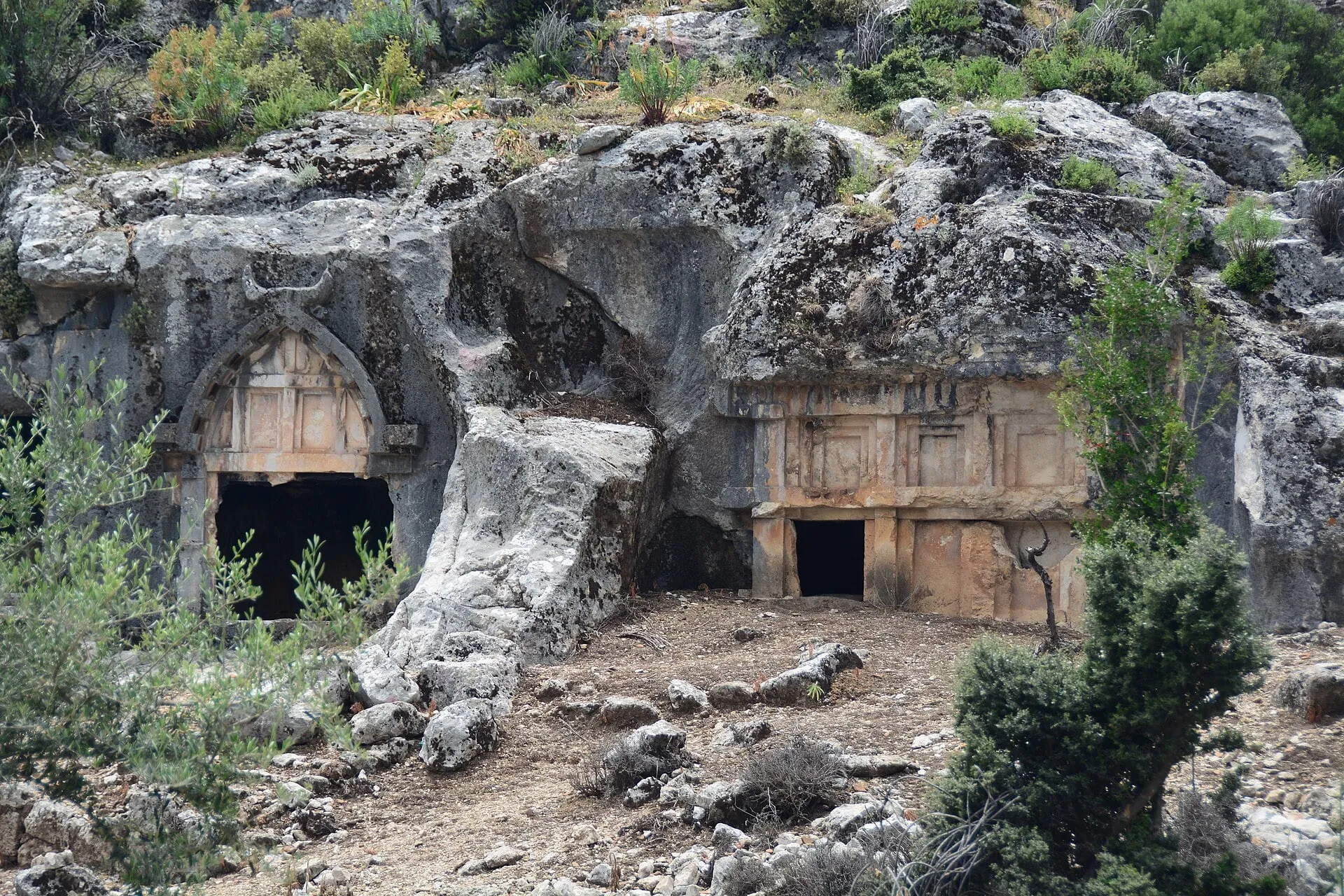
Cut into cliff faces to copy timber houses, beams, doors and all. The cliffs of Pinara and Myra are honeycombed with them; at Myra, one painted tomb shows a whole family in relief.
-
© Arthur SMITH (author, curator) (1860–1941) George Scharf (Illustrator) (1820 – 1895) · Public domain Sarcophagi
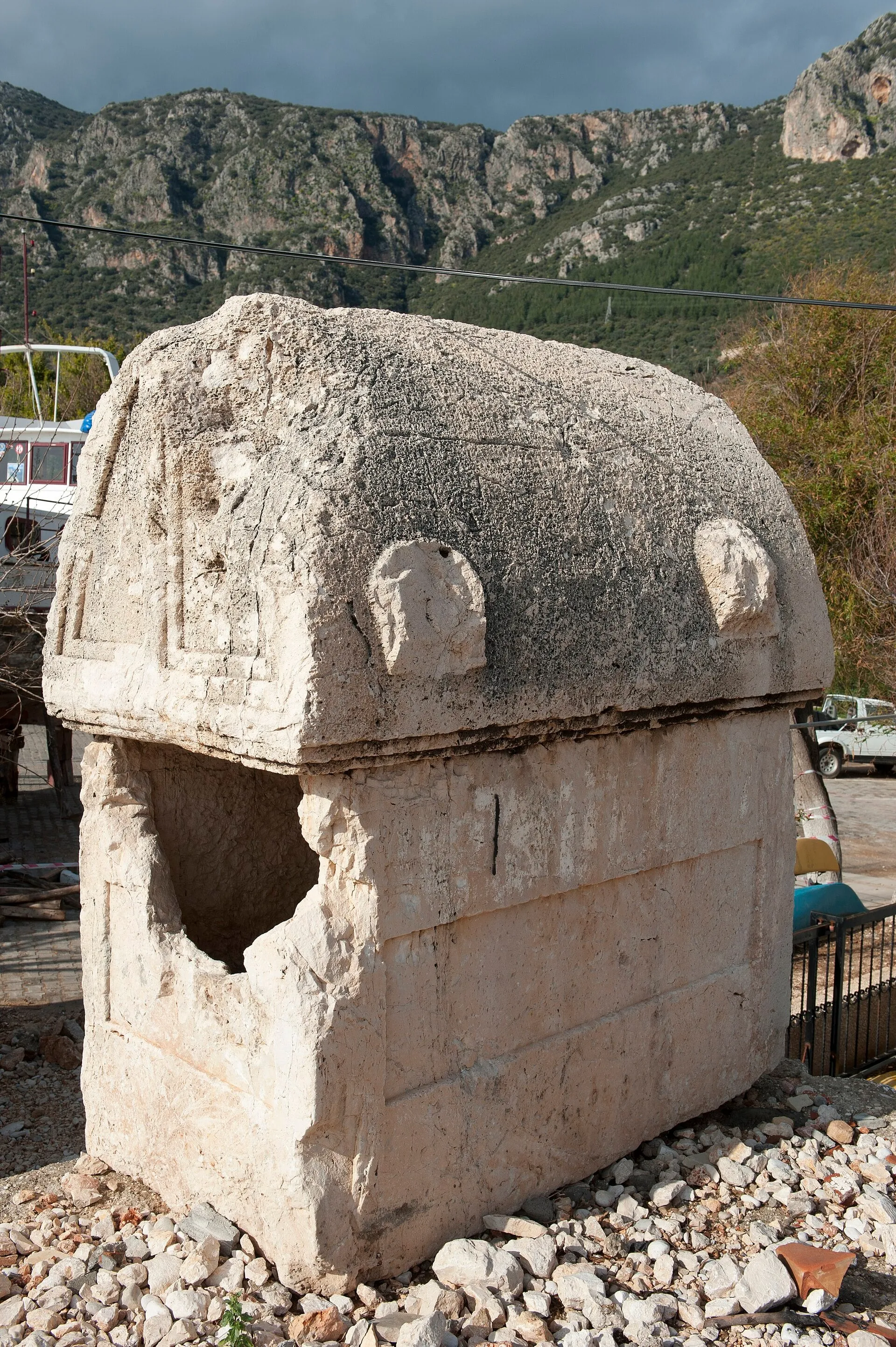
A stone chest on a tall base, closed by a lid shaped like an upturned boat. The tomb of Payava from Xanthos, from around 360 BC, is the finest; simpler ones stand in village fields along the trail.
The Lycian League
From the 2nd century BC the cities of Lycia governed themselves as a federation, the Lycian League. According to the geographer Strabo, 23 cities sent delegates to a common assembly: the six largest (Xanthos, Patara, Pinara, Tlos, Myra and Olympos) had three votes each, middle-sized cities two and the rest one, and taxes and public offices were shared out in the same proportion.
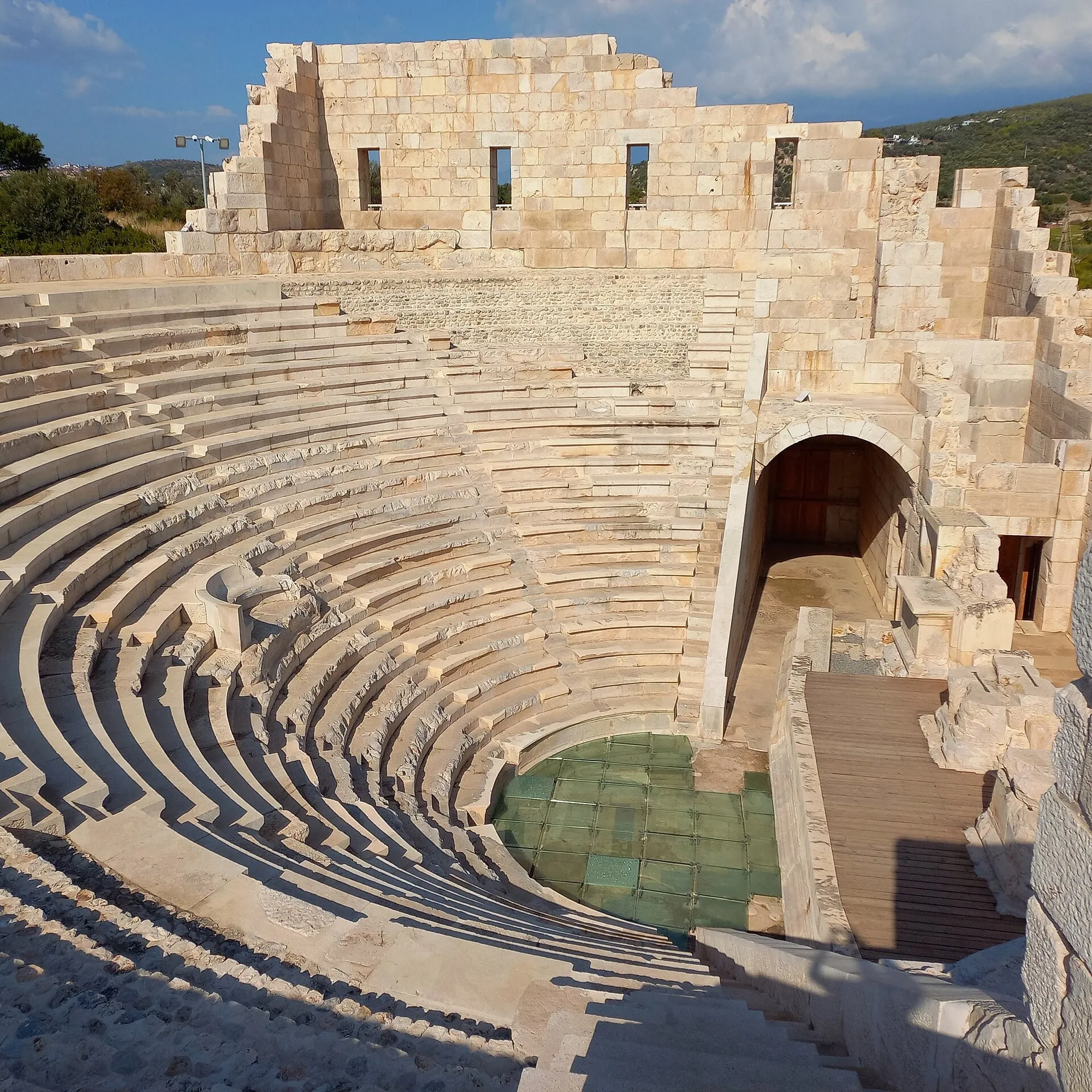
The assembly met in the city it chose, often at Patara, whose restored council house is thought to have held its meetings. Centuries later Montesquieu called Lycia the model of an excellent confederate republic, and the authors of the Federalist Papers cited it when arguing for the American constitution.
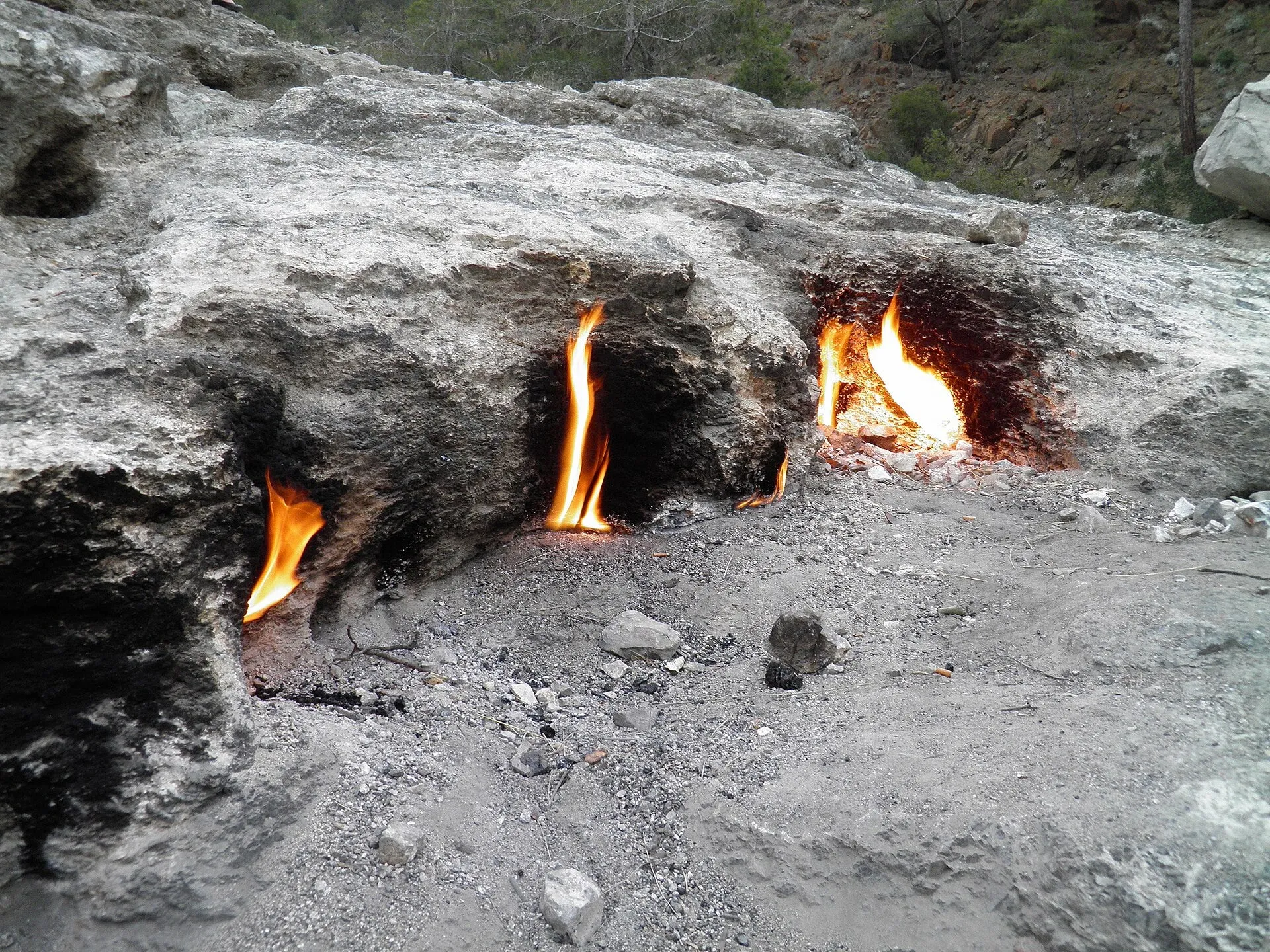
The Chimaera
Above Çıralı, flames burn from the rock day and night. The Greeks told of the Chimaera, lion in front, goat in the middle and serpent behind, who breathed fire over this land until the hero Bellerophon flew in on the winged horse Pegasus and killed it. Geologists point instead to natural gas seeping from deep rock. Standing among the flames after dark, the old story is easier to believe.
Discover04 Timeline
Along the way.
- c. 1274 BC
The Lukka at Kadesh
Egyptian records list the Lukka, usually taken to be early Lycians, among the Hittite allies at the battle of Kadesh.
- c. 690 BC
Phaselis is founded
Settlers from Rhodes found a harbour city on a wooded peninsula below Tahtalı.
- 545 BC
Persian conquest
Harpagus, general of Cyrus the Great, takes Lycia; Xanthos burns itself rather than surrender.
- c. 380 BC
Perikles of Limyra
A Lycian ruler tries to unite the whole country under his rule from his capital at Limyra.
- 337 BC
The Letoon trilingual
A decree is set up at the Letoon in Lycian, Greek and Aramaic, today the key to reading Lycian.
- 333 BC
Alexander the Great
Alexander marches along this coast and spends part of the winter at Phaselis.
- 188 BC
Given to Rhodes
After Rome defeats the Seleucid king, Lycia is handed to Rhodes and fights for twenty years to be free.
- 167 BC
The Lycian League
Rome declares Lycia free, and the federation of its cities comes into its own. Olympos is among the leading six.
- 78 BC
Pirates of Olympos
Rome’s Servilius Isauricus defeats the pirate lord Zeniketes, who held Olympos and the mountain above it.
- AD 43
A Roman province
Under Emperor Claudius Lycia becomes part of the Roman Empire.
- AD 129
Hadrian’s journey
The emperor Hadrian tours the region; Phaselis builds a monumental gate for his visit.
- AD 141
The great earthquake
An earthquake damages many Lycian cities; a wealthy citizen, Opramoas of Rhodiapolis, pays to rebuild them.
- 4th c. AD
Nicholas of Myra
The bishop of Myra, later St Nicholas, lives and preaches in Lycia.
- 7th c. AD
Raids from the sea
Arab raids empty much of the coast; many cities shrink or are abandoned.
- 1838
Fellows at Xanthos
The English traveller Charles Fellows reaches Xanthos; within a few years its finest tombs are shipped to the British Museum.
- 1972
A national park
The coast from south of Antalya to Cape Gelidonya, with Tahtalı, is protected as a national park.
- 1999
The Lycian Way
Kate Clow waymarks a long-distance trail across Lycia, the first in Türkiye.
05 Near Beycik
Ancient places within a day’s walk.
-
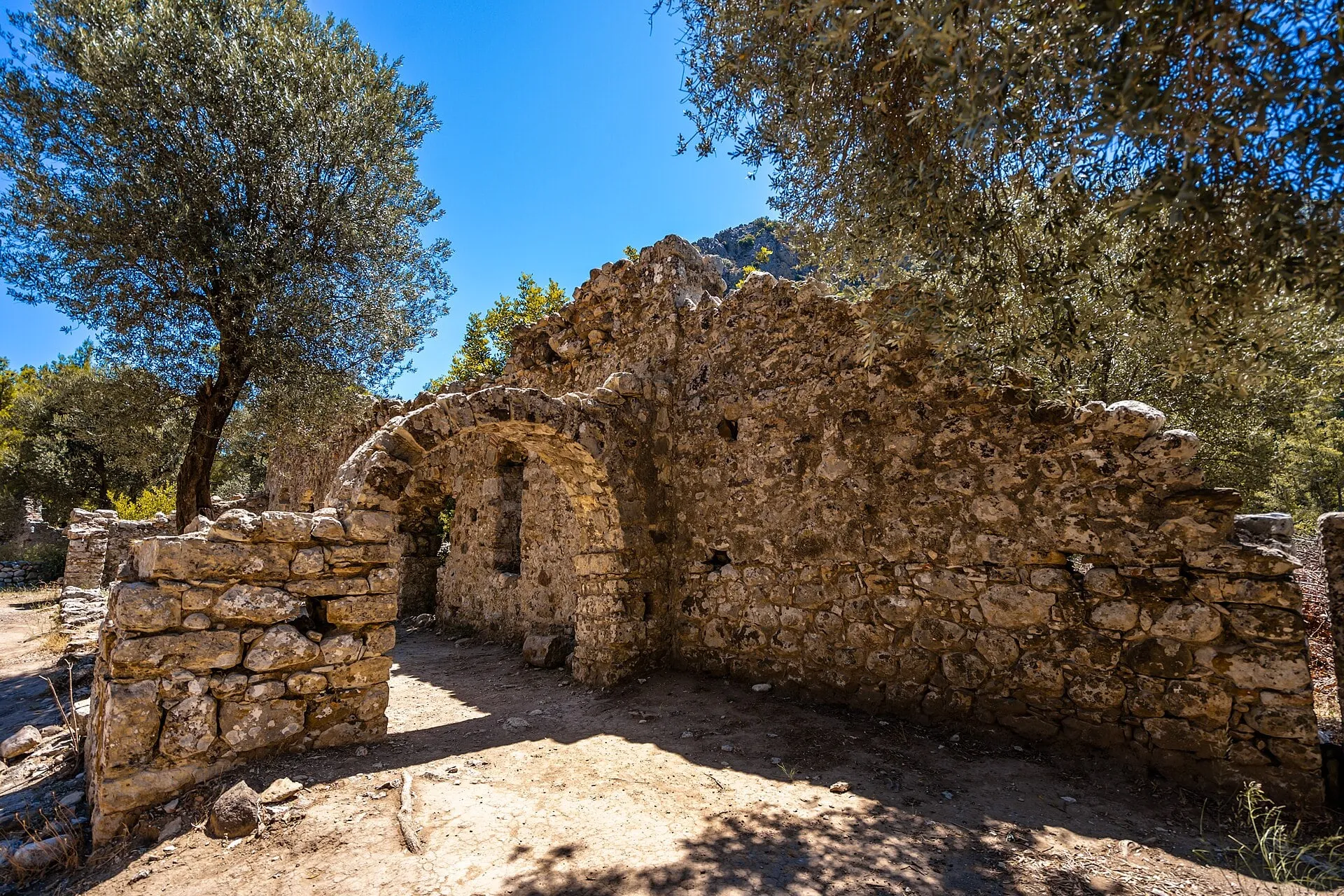 © Capyusuf · CC BY-SA 4.0 Olympos One of the six leading cities of the Lycian League, in a gorge running down to the sea. 35 min · 24 km
-
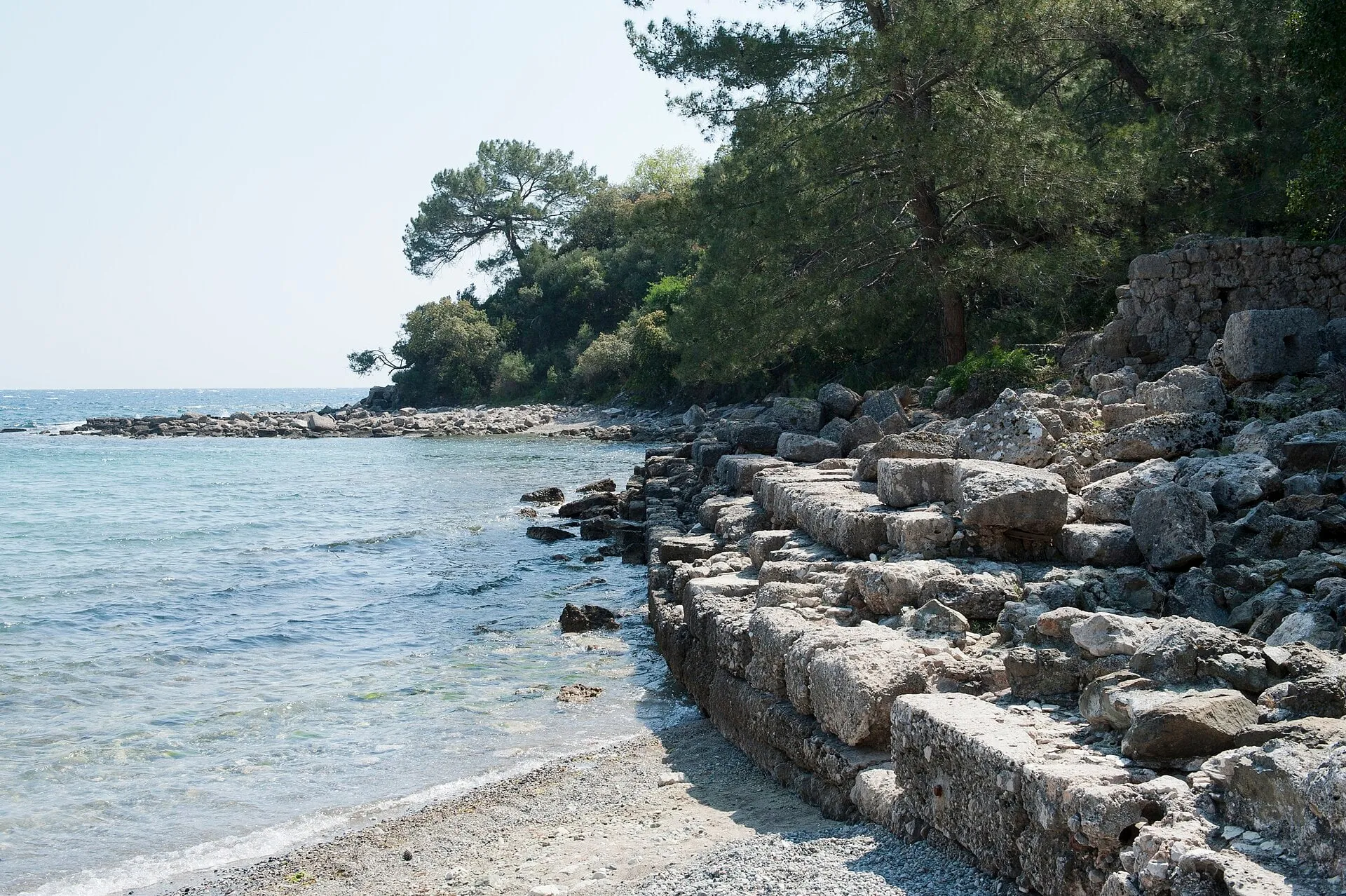 © Dosseman · CC BY-SA 4.0 Phaselis Three harbours, a paved main street and Hadrian’s gate under the pines. 25 min · 18 km
- © Carole Raddato from FRANKFURT, Germany · CC BY-SA 2.0 Chimaera The fire on the mountain, and the ruins of a temple and church beside it. 25 min · 17 km